Single-Factor vs Multi-Factor Authentication in E-Signing
Single-factor authentication in e-signing verifies a signer using one credential, such as an email link or password.
Multi-factor authentication verifies a signer using two or more independent factors from different categories, significantly increasing security and identity assurance.
Multi-factor authentication reduces fraud risk, strengthens legal defensibility, and aligns with modern regulatory expectations for electronic signatures.
Electronic signatures are now a foundational part of executing agreements across finance, healthcare, real estate, HR, and legal operations. As usage has expanded, scrutiny has increased. Regulators, auditors, and courts now focus less on whether a document was signed electronically and more on how reliably the signer’s identity was authenticated at the time of signing.
This distinction is especially critical in 2026. Credential theft, business email compromise, and AI-driven phishing have materially increased the risk of unauthorized signing. At the same time, compliance frameworks increasingly expect modern e-signature software to provide demonstrable identity assurance rather than convenience-driven access controls. Choosing between single-factor and multi-factor authentication is no longer a technical detail. It is a governance decision with direct legal, financial, and reputational implications.
Key Takeaways:
Single-factor authentication relies on one credential and is vulnerable to phishing and account compromise.
Multi-factor authentication uses independent factors to significantly reduce fraud and impersonation risk.
Strong authentication improves audit trails, dispute resolution, and legal defensibility of signatures.
Regulated and high-risk documents increasingly require MFA to meet compliance expectations.
Authentication level should be based on document risk, not signer convenience.
What Is the Real Difference Between Single-Factor and Multi-Factor Authentication in E-Signing?
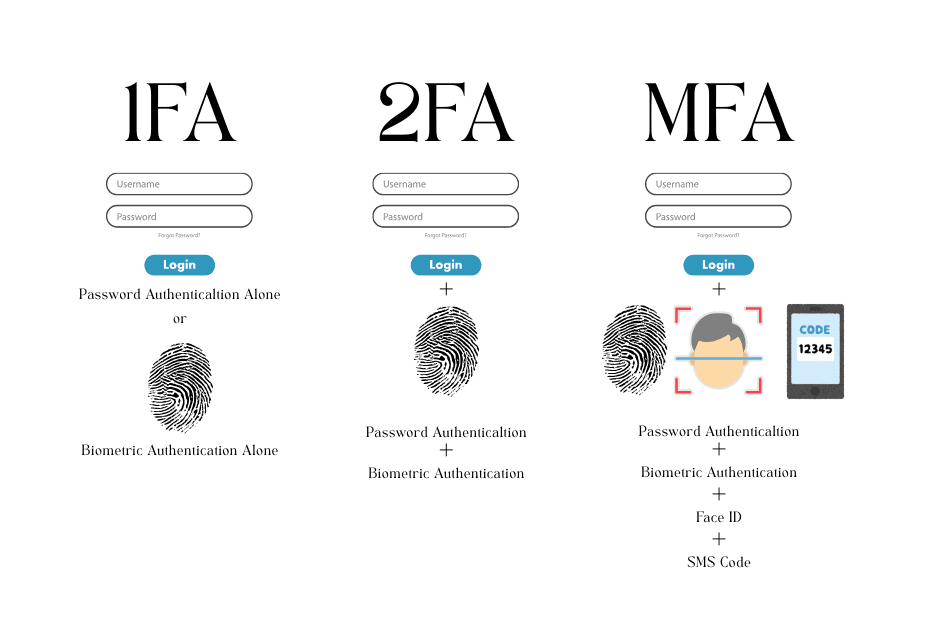
The difference between single-factor and multi-factor authentication in e-signing is the number of independent verification factors required to confirm a signer’s identity.
Single-factor authentication verifies identity using one factor, such as a password or email access.
Multi-factor authentication verifies identity using two or more factors from different categories, such as knowledge, possession, or inherence.
What often gets missed in surface-level explanations is that authentication strength is not only about security. It directly influences trust, audit quality, dispute outcomes, and regulatory alignment. In e-signing, authentication is the bridge between a digital action and a legally attributable human decision.
How Authentication Works in Modern E-Signing Platforms
Authentication in e-signing is frequently confused with identity verification. They are related but distinct.
Identity verification establishes who the signer claims to be.
Authentication confirms that the person attempting to sign is the same verified individual.
A typical e-signing authentication workflow includes:
Document access initiation
Signer authentication challenge
Session validation
Signature capture
Audit trail generation
Weak authentication at any point creates downstream risk. If access credentials are compromised, forwarded, or intercepted, the platform may still record a valid signature even though the signer was not the intended party.
Single-Factor Authentication (SFA) Explained
Definition and Characteristics
Single-factor authentication uses a single piece of evidence to grant signing access. Once that factor is compromised, there are no additional safeguards.
Common SFA Methods in E-Signing
Email-based authentication links
Basic username and password login
One-click access tokens
Advantages
Single-factor authentication is frictionless. It reduces signer drop-off, minimizes support overhead, and is inexpensive to implement. For low-risk workflows, these benefits are often compelling.
Limitations
The same simplicity that makes SFA attractive also makes it fragile. Email accounts are routinely compromised. Password reuse is widespread. Phishing attacks increasingly target document signing workflows specifically because they are trusted channels.
Once the single factor is breached, the attacker gains full signing authority.
When SFA Is Appropriate
Internal approvals with minimal legal exposure
Non-binding acknowledgments
Low-value documents with no regulatory implications
When SFA Should Be Avoided
Financial agreements
Healthcare authorizations
Legal settlements
Any document where identity disputes carry material consequences
In practice, many organizations continue using SFA beyond its safe boundary, often without realizing the liability they are accepting.
Multi-Factor Authentication (MFA) in E-Signing
Definition and Principles
Multi-factor authentication combines verification factors from different categories so that compromising one factor does not grant signing access. The core principle is independence. Each factor must fail separately for an attack to succeed.
In e-signing, this layered approach ensures that access to a signing session cannot be achieved through a single compromised credential, such as a hacked email account or stolen password.
The Three Authentication Factor Categories
Knowledge factors such as passwords, PINs, or shared secrets
Possession factors such as SMS one-time passcodes, authenticator apps, or hardware security keys
Inherence factors such as fingerprints, facial recognition, or other biometric identifiers
Multi-factor authentication requires factors to come from at least two different categories.
Two-Factor Authentication (2FA) Within MFA
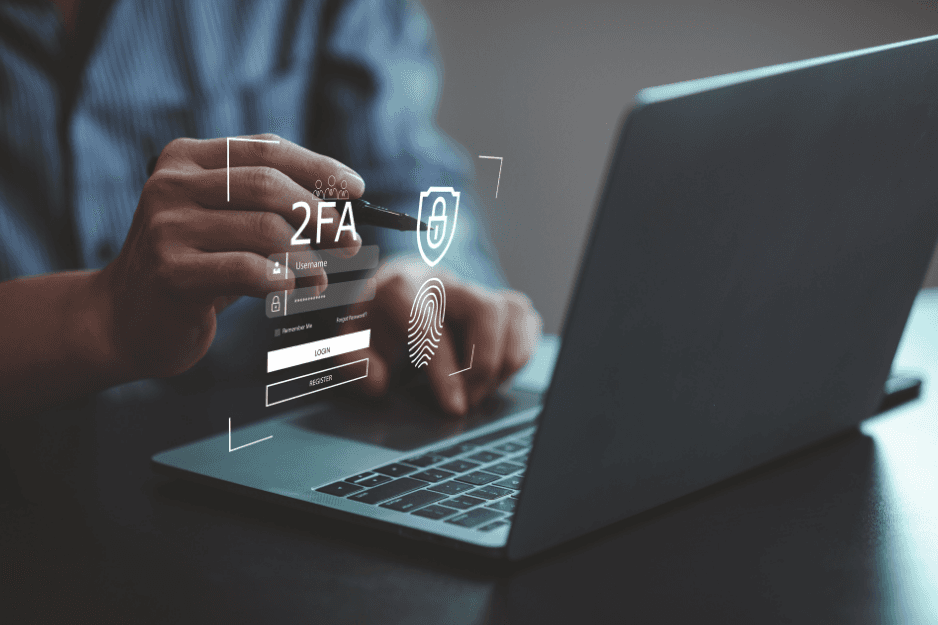
Two-factor authentication is a specific and widely adopted implementation of multi-factor authentication that uses exactly two independent factors. In practice, most MFA-protected e-signing workflows rely on two-factor authentication rather than three or more factors.
From a compliance and risk perspective, properly implemented 2FA generally satisfies multi-factor authentication requirements when the factors are truly independent.
Common MFA and 2FA Methods Used in E-Signing
Password plus SMS OTP
Email access plus app-based OTP
Signing link plus biometric unlock on a trusted device
Government-issued ID verification combined with biometric liveness checks
Hardware security keys for high-risk or regulated signers
These methods are commonly used because they balance strong identity assurance with reasonable signer friction.
Why MFA and 2FA Are So Effective
Even if an attacker steals credentials, they still lack the second factor required to complete the signing process. Industry data consistently shows that multi-factor authentication, including two-factor authentication, blocks the vast majority of automated, phishing-based, and opportunistic attacks.
For this reason, regulators and auditors increasingly treat MFA as a baseline control rather than an advanced security feature.
Regulatory and Compliance Drivers
Multi-factor authentication supports compliance with major regulatory and security frameworks, including:
GDPR data protection principles
HIPAA access control requirements
PCI-DSS strong authentication expectations
NIST 800-63 identity assurance levels
eIDAS requirements for advanced and qualified electronic signatures
In many regulated environments, the absence of MFA or 2FA creates audit findings even when electronic signatures are otherwise valid.
When MFA or 2FA Should Be Mandatory
Financial transactions
Healthcare documentation
Legal agreements with enforceability requirements
Corporate governance approvals
Cross-border or high-value contracts
For extremely high-risk agreements, organizations may layer additional factors on top of two-factor authentication, such as identity document verification or biometric liveness checks.
Single-Factor vs Multi-Factor Authentication Comparison
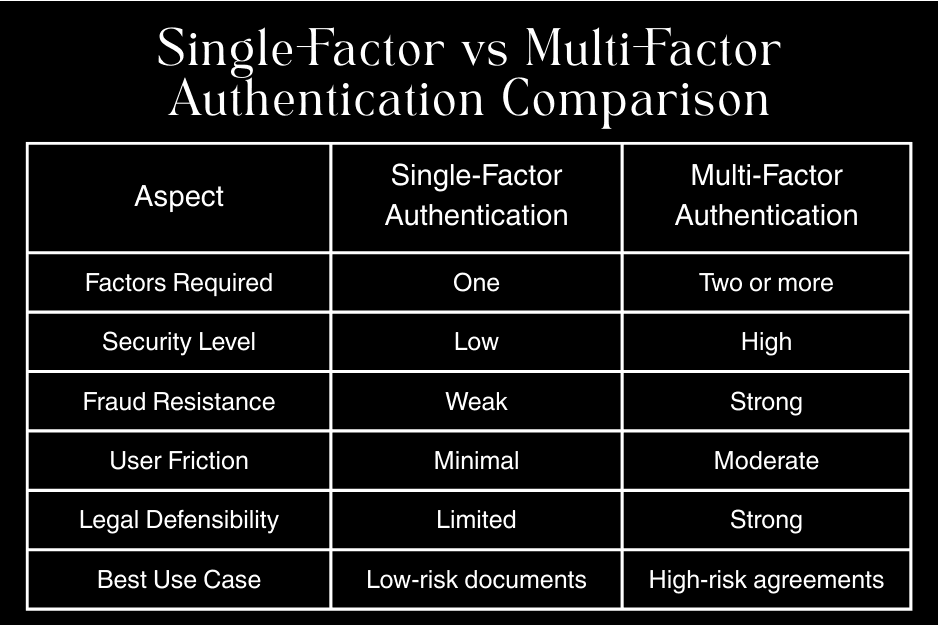
Advanced Identity Validation in Modern E-Signing
Authentication does not operate in isolation. Leading e-signing workflows combine MFA with advanced identity validation to further strengthen assurance.
These methods include:
Government ID document verification
Biometric face matching with liveness detection
Device fingerprinting and IP reputation analysis
Geolocation consistency checks
Risk-based authentication that adapts factor requirements dynamically
This layered approach reflects how modern threats operate. Static authentication is no longer sufficient when attackers adapt in real time.
Risk Considerations for Secure Electronic Signing
The risk profile for electronic signing has shifted dramatically.
Business email compromise continues to rise globally
AI-generated phishing emails mimic legitimate signing requests with high accuracy
Synthetic identities are increasingly used to exploit weak onboarding and signing flows
Remote work environments reduce contextual identity cues
In this environment, relying on single-factor authentication for sensitive agreements is increasingly difficult to justify.
Authentication Requirements by Document Type
Low-risk documents may tolerate single-factor authentication.
Medium-risk documents benefit from step-up authentication.
High-risk documents require multi-factor authentication or identity verification.
Financial, healthcare, legal, and HR documents consistently fall into the high-risk category due to regulatory oversight and dispute potential.
Frequently Asked Questions
What is the difference between authentication and identity verification in e-signing?
Authentication confirms that the signer is the same person who was previously verified, while identity verification establishes who the signer is in the first place.
Identity verification typically occurs before or during onboarding and may involve government ID checks, biometric matching, or database verification. Authentication occurs at the moment of signing and confirms that the verified individual is the one accessing the signing session. Strong e-signing workflows use both. Identity verification without strong authentication still allows impersonation, while authentication without prior verification only confirms access, not true identity.
What happens if a signer fails MFA during the signing process?
The signing session is blocked, and the document remains unsigned until authentication is successfully completed.
Failed MFA attempts typically trigger retry limits, session expiration, or additional verification steps. This prevents unauthorized access while preserving the integrity of the document and audit trail. Failed authentication attempts are usually logged, which can be important for security monitoring and dispute resolution.
Does MFA affect the audit trail of an electronic signature?
Yes. MFA strengthens the audit trail by documenting multiple independent verification events.
Audit logs for MFA-protected signatures include evidence of each factor used, timestamps, IP addresses, device data, and authentication outcomes. This additional context significantly improves traceability and evidentiary value in audits, investigations, or legal disputes compared to single-factor logs.
Is MFA required for cross-border electronic signatures?
Often yes, especially when agreements fall under international or region-specific regulations.
Cross-border agreements are subject to varying legal standards such as eIDAS in the EU or sector-specific requirements in financial and healthcare industries. Many international transactions require higher identity assurance to ensure enforceability across jurisdictions. As a result, MFA or identity verification is commonly required for cross-border e-signing.
Can MFA reduce electronic signature disputes?
Yes. MFA significantly reduces disputes by strengthening attribution and non-repudiation.
When multiple independent factors are required to sign, it becomes much harder for a signer to credibly deny involvement. Organizations that use MFA experience fewer disputes and resolve them more quickly because authentication evidence is clearer and more defensible.
Is single-factor authentication enough for electronic signatures?
Yes, but only for low-risk documents where identity disputes would have no material legal, financial, or regulatory consequences.
Single-factor authentication is generally acceptable for internal acknowledgments, non-binding agreements, or documents that do not create enforceable obligations. In these cases, the primary risk is operational rather than legal.
For any document involving employment, healthcare, finance, personal data, or contractual liability, single-factor authentication is insufficient. If the signer’s email account or password is compromised, there is no secondary control to prevent unauthorized signing. Courts and auditors increasingly view single-factor authentication as weak identity assurance when disputes arise.
Do electronic signatures require multi-factor authentication?
No, electronic signature laws do not universally require multi-factor authentication, but many regulated and high-risk use cases effectively demand it.
In the United States, ESIGN and UETA do not mandate specific authentication methods. Instead, they require that the signer can be reliably identified and that the signature is attributable to that person.
In practice, regulatory frameworks such as HIPAA, PCI-DSS, GDPR, FINRA guidance, and NIST 800-63 strongly favor or explicitly require multi-factor authentication for access to sensitive data and systems. As a result, organizations operating in regulated industries often implement MFA for e-signing to meet compliance expectations and reduce legal exposure.
While MFA may not be legally mandatory in every case, it is often operationally required to satisfy audits, regulators, insurers, and internal risk controls.
Is email authentication secure for signing documents?
No, email authentication alone is not considered secure for high-risk or regulated electronic signatures.
Email-based authentication relies entirely on the security of the signer’s email account. If that account is compromised, forwarded, or accessed by an unauthorized party, the signing link can be used without detection.
Email authentication may be acceptable for low-risk documents, but it provides no protection against common threats such as phishing, business email compromise, or shared inbox access. For any agreement where signer identity must be defensible, email authentication should be combined with a second factor such as an OTP, authenticator app, or biometric verification.
Does multi-factor authentication improve legal enforceability?
Yes, multi-factor authentication materially improves legal enforceability by strengthening non-repudiation and attribution.
Multi-factor authentication provides documented evidence that more than one independent control was required to complete the signing process. This makes it significantly harder for a signer to later deny authorship of a signature.
In disputes, audit trails that show MFA or two-factor authentication was used carry more evidentiary weight than single-factor logs. Courts and arbitrators consistently favor authentication methods that demonstrate reasonable steps were taken to verify signer identity, especially when sensitive or high-value agreements are involved.
Real-World Scenarios Where MFA Prevents Fraud

Email forwarding is one of the most common failure points in e-signing. A forwarded signing link combined with SFA allows unintended parties to sign without detection. MFA stops this immediately.
Compromised executive email accounts present another common risk. MFA prevents attackers from executing binding agreements even after account takeover.
Choosing the Right Authentication Level
Authentication decisions should be based on document risk, not user convenience.
We recommend evaluating:
Financial impact of unauthorized signing
Regulatory obligations
Likelihood of identity disputes
Sensitivity of the data involved
When in doubt, stronger authentication is almost always the safer long-term choice.
Implementation Roadmap for MFA in E-Signing
Identify high-risk document categories
Introduce MFA selectively rather than universally
Communicate clearly with signers to reduce friction
Monitor authentication success and failure rates
Continuously reassess based on threat evolution
The Future of Authentication in E-Signing

The future of authentication in e-signing is being shaped by modern e-signature software that prioritizes security, usability, and verifiable identity assurance at scale. The industry is moving toward passwordless authentication, decentralized digital identity, and continuous behavioral verification that can assess risk throughout the signing session, not just at login.
At ROGER, we design our modern e-signature software around this reality. We recognize that single authentication checks are no longer sufficient in a threat landscape defined by credential theft, AI-driven phishing, and remote signing. Multi-factor authentication is not the end state of secure e-signing. It is the current minimum viable defense.
As authentication technology evolves, modern e-signature platforms will increasingly combine adaptive MFA, identity verification, device intelligence, and real-time risk analysis to ensure every signature is attributable, auditable, and legally defensible. The goal is not to add friction, but to apply the right level of assurance based on document risk and signer context.
For teams evaluating how authentication fits into their signing workflows, understanding these trade-offs early matters. That is why we encourage organizations to book a call and discuss how modern authentication approaches can be applied to their specific document types, risk profile, and compliance requirements.
We believe the future of e-signing belongs to platforms that treat authentication as a core trust mechanism rather than a checkbox feature. Modern e-signature software must make strong authentication invisible when risk is low and decisive when risk is high. That is the standard we build toward at ROGER.